AI Strategy and Digital Transformation in Organisations: Frameworks, Challenges, and Pathways to Successful Implementation
AI Strategy and Digital Transformation in Organisations
Abstract
In an era of rapid technological advancement, artificial intelligence (AI) has become a cornerstone of digital transformation (DT) within organisations. This article examines the interplay between AI strategy and DT, elucidating the mechanisms through which digital initiatives reshape organisational structures, processes, and cultures. Drawing on empirical insights from leading research and industry analyses, it articulates the scientific underpinnings of successful adoption, identifies pervasive challenges, and delineates a rigorous framework for implementation. Particular emphasis is placed on the governance elements of an AI initiative, including the charter, sponsor, and leadership roles, which are critical for aligning technological innovation with strategic business objectives. British English conventions are employed throughout.
This article credits go back to Tom Hermann, AI Strategy and Adoption Specialist with studies from IMD Lausanne and Zurich.
Introduction to AI Strategy and Digital Transformation
Digital transformation refers to the fundamental redesign of business models, processes, and customer experiences through the integration of digital technologies. AI strategy, as a subset and accelerator of DT, involves the deliberate deployment of machine learning, generative models, predictive analytics, and autonomous systems to drive value creation, operational efficiency, and competitive advantage.
Empirically, organisations that integrate AI into DT initiatives report higher productivity gains and innovation rates. High-performing firms excel across key dimensions: strategy, talent, operating model, technology, data, and scaling. However, success is not guaranteed; a significant proportion of AI projects fail to deliver expected value due to misalignment and execution gaps.
Scientifically, DT can be modelled as a complex adaptive system where inputs (data, technology, human capital) interact nonlinearly to produce emergent outcomes (efficiency, innovation). AI introduces feedback loops via reinforcement learning and agentic systems, enabling self-optimising processes that mirror biological evolution or thermodynamic systems seeking lower entropy states through automation.
How Digital Transformation Works in an Organisation
DT unfolds as a phased, iterative process rather than a linear project. Key stages include:
1. **Assessment of Current State**: Organisations audit legacy systems, data architectures, and cultural readiness. This involves maturity assessments evaluating levels from ad-hoc experimentation to enterprise-wide integration.
2. Vision and Strategy Formulation**: Alignment with business objectives is paramount. Customer-centric process redesign, data-driven decision-making, and talent development form core pillars.
3. Implementation and Integration**: Technologies are piloted, scaled, and embedded. This includes modernising infrastructure, adopting cloud-native platforms, and implementing AI for hyperautomation.
4. Change Management and Cultural Shift**: People-centric approaches address resistance, fostering AI literacy and agile mindsets. Established change management methodologies emphasise sponsorship and coaching.
5. Monitoring, Evaluation, and Iteration**: Key performance indicators, objectives and key results, and real-time feedback loops ensure sustained value. Data governance and ethical frameworks prevent drift.
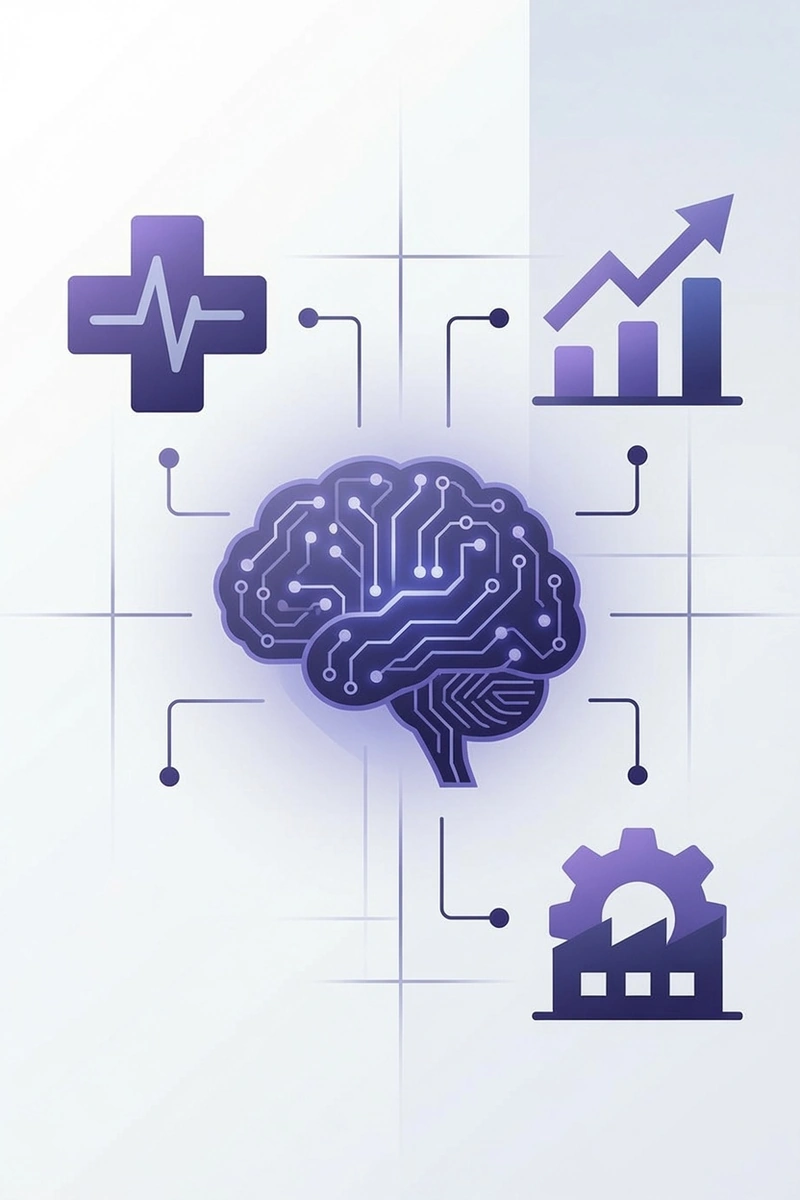
In practice, DT transforms siloed functions into interconnected ecosystems. For instance, AI-enabled predictive maintenance in manufacturing reduces downtime through sensor data fusion and machine learning models, demonstrating quantifiable entropy reduction in operational processes.
Challenges in AI-Driven Digital Transformation
Despite potential benefits, organisations encounter multifaceted challenges:
Strategic and Organisational Lack of clear alignment between AI initiatives and business goals leads to fragmented efforts. Cultural resistance and skills gaps hinder adoption; many firms remain at early experimentation stages.
Data and Technical Poor data quality, integration issues, and insufficient infrastructure impede model performance. Scalability remains elusive, with many pilots failing to reach production.
-Governance and Ethical: Risks include bias, privacy breaches, regulatory non-compliance, and intellectual property concerns. Vendor lock-in and spiralling costs exacerbate technical debt.
-Human and Change-Related Talent shortages, fear of job displacement, and inadequate leadership sponsorship result in low adoption rates. High performers distinguish themselves through robust human validation processes and change management.
These challenges are quantifiable, often manifesting in increased defects or prolonged review times in AI-augmented workflows without proper governance.
Implementing a Successful AI Strategy
A rigorous, evidence-based approach mitigates risks and maximises returns. Recommended frameworks synthesise best practices:
1. Define Objectives and Align with Business Needs**: Conduct audits and set measurable goals tied to return on investment, productivity, and customer value.
2. Build Robust Data Foundations and Infrastructure**: Prioritise data governance, quality, and scalable platforms.
3. Develop Talent and Foster Culture**: Invest in upskilling, AI literacy programmes, and cross-functional teams. Leadership must model behaviours.
4. Adopt Phased Implementation**: Start with high-impact pilots (for example, in IT or HR automation), iterate via controlled environments, then scale. Use machine learning operations for deployment.
5. Establish Governance and Ethics**: Implement frameworks addressing bias, transparency, and accountability.
6. Monitor and Scale with Feedback**: Employ real-time metrics and continuous refinement. High performers excel in validation and operating models.
Success metrics include productivity gains, cost savings, and innovation indices, benchmarked against maturity models.
Initiative Charter, Sponsor, and Leader: Critical Governance Elements
Effective AI initiatives require formal structures for accountability and alignment.
**The Initiative Charter**: This foundational document articulates purpose, scope, objectives, success criteria, risks, resources, and timelines. It serves as a binding agreement, akin to a scientific protocol. Key components include:
- Vision and strategic alignment.
- Scope boundaries and exclusions.
- Key performance indicators and objectives and key results (for example, return on investment thresholds, adoption rates).
- Governance model, risk matrix, and ethical guidelines.
- Stakeholder roles and escalation paths.
- Approval mechanisms.
The charter is developed collaboratively during the alignment phase and formally approved by the sponsor.
The Sponsor (Executive Sponsor): A single accountable senior executive (often C-suite) provides strategic oversight, secures budget, and champions the initiative at the highest levels. Responsibilities include:
- Ensuring financial and resource commitment.
- Removing organisational barriers.
- Monitoring key performance indicators and intervening on variances.
- Modelling AI adoption personally.
- Facilitating executive partnerships.
Passive sponsorship fails; active, visible engagement is essential for momentum.
The Leader (AI Transformation Leader / Programme Lead)**: This operational role translates strategy into execution. Often a dedicated AI or DT leader, they coordinate cross-functional teams, manage delivery, and drive change. Duties encompass:
- Day-to-day programme management using agile and product methodologies.
- Stakeholder coordination and risk mitigation.
- Talent development and resistance management.
- Ensuring technical and ethical compliance.
- Reporting progress to the sponsor.
Together, these elements form a tripartite governance model: the charter as constitution, sponsor as patron, and leader as executor. Empirical evidence underscores their necessity; initiatives with strong executive sponsorship and clear charters exhibit significantly higher success rates.
Conclusion
AI strategy, when seamlessly integrated into digital transformation, empowers organisations to navigate complexity and achieve sustainable competitive advantage. By addressing challenges through structured, scientific approaches—grounded in data, governance, and human-centric leadership—firms can realise transformative value. The initiative charter, executive sponsor, and dedicated leader provide the organisational scaffolding essential for success. As AI evolves toward agentic and autonomous systems, proactive, ethical implementation will distinguish leaders from laggards. Organisations must act decisively, viewing DT not as a cost centre but as an investment in future resilience and innovation.
This article credits go back to Tom Hermann, AI Strategy and Adoption Specialist with studies from IMD Lausanne and Zurich and over 15 years of experience