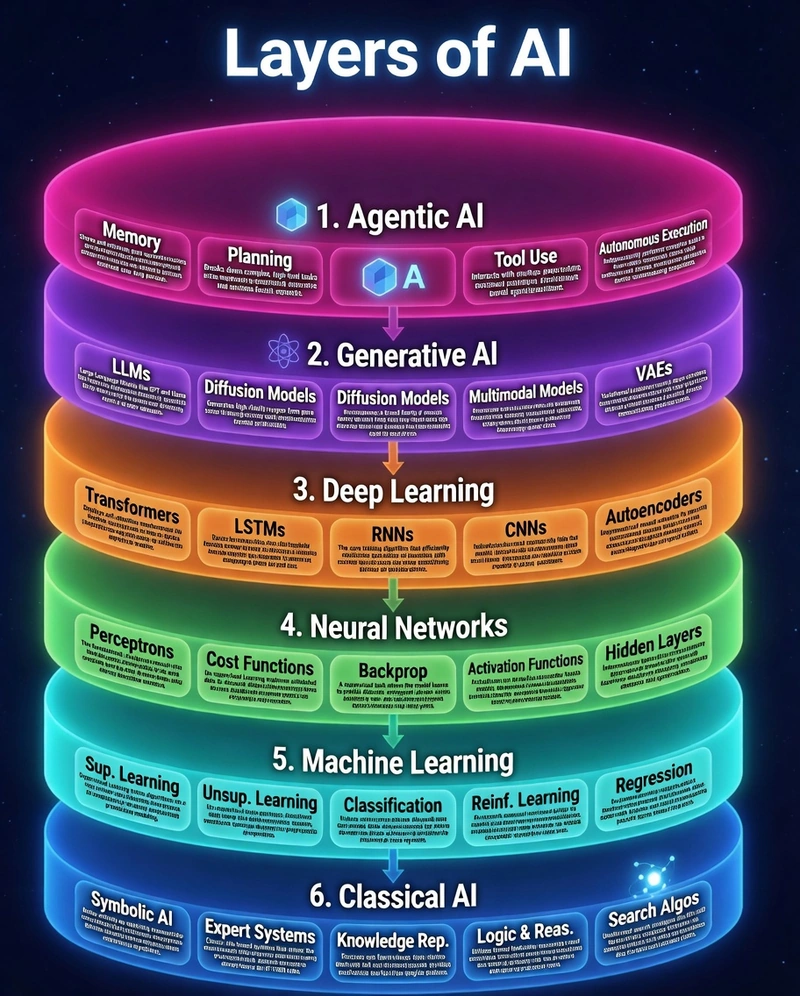
Agentic AI best use cases
How to make the best of Agentic Ai

Agentic AI: Transforming Business Operations Through Autonomous Intelligence
Introduction
Artificial Intelligence (AI) has evolved rapidly over the past decade, moving from simple rule-based systems to sophisticated machine learning models capable of understanding language, images, and complex data. The latest advancement in this evolution is Agentic AI—a new paradigm that enables AI systems to act autonomously, make decisions, execute tasks, and continuously adapt to changing environments with minimal human intervention.
Unlike traditional AI systems that primarily respond to prompts or perform predefined tasks, Agentic AI functions as an intelligent agent capable of planning, reasoning, taking actions, and learning from outcomes. This shift is creating significant opportunities across industries, enabling organizations to automate complex workflows, improve decision-making, and enhance operational efficiency.
This article explores Agentic AI, its core characteristics, business benefits, and key use cases across various industries.
What is Agentic AI?
Agentic AI refers to AI systems that can independently pursue goals by:
- Understanding objectives
- Creating execution plans
- Taking actions across multiple systems
- Monitoring outcomes
- Adjusting strategies based on feedback
These systems combine several capabilities:
- Large Language Models (LLMs)
- Reasoning engines
- Memory systems
- Tool integration
- Workflow orchestration
- Autonomous decision-making
An Agentic AI system behaves similarly to a digital employee rather than a traditional software tool.
For example, instead of merely answering a customer question, an agentic system can:
- Understand the customer’s request.
- Access internal databases.
- Verify account information.
- Process a transaction.
- Generate documentation.
- Follow up with the customer.
All without requiring constant human guidance.
Key Characteristics of Agentic AI
1. Goal-Oriented Behavior
Agentic systems focus on achieving outcomes rather than simply responding to commands.
Example:
Goal: Reduce inventory shortages.
The AI agent can analyze inventory data, forecast demand, place orders, and monitor supplier performance automatically.
2. Autonomous Decision-Making
These systems evaluate options and select the most appropriate course of action based on available information.
3. Continuous Learning
Agentic AI learns from successes and failures, improving future performance.
4. Multi-Step Reasoning
Instead of handling isolated tasks, Agentic AI executes entire workflows involving multiple decisions and actions.
5. Tool Usage
Modern AI agents can interact with:
- ERP systems
- CRM platforms
- Databases
- APIs
- Email systems
- Analytics tools
This enables real-world task execution.
Why Businesses Are Investing in Agentic AI
Organizations are increasingly adopting Agentic AI because it offers:
Increased Productivity
AI agents can perform tasks 24/7 without fatigue.
Cost Reduction
Automation reduces operational expenses and minimizes manual work.
Faster Decision-Making
Real-time analysis enables rapid responses to changing conditions.
Improved Customer Experience
Customers receive quicker, more personalized support.
Scalability
Organizations can handle growing workloads without proportional increases in staffing.
Top Agentic AI Use Cases
1. Customer Service Automation
Challenge
Traditional chatbots often fail when conversations become complex.
Agentic AI Solution
Agentic customer service agents can:
- Understand customer intent
- Access customer records
- Troubleshoot issues
- Process refunds
- Escalate cases when necessary
Benefits
- Reduced support costs
- Faster resolution times
- Improved customer satisfaction
Example Workflow
A customer requests a refund.
The AI agent:
- Verifies purchase history.
- Reviews refund eligibility.
- Processes the refund.
- Updates CRM records.
- Sends confirmation emails.
2. IT Service Management
Challenge
IT teams spend significant time resolving repetitive issues.
Agentic AI Solution
AI agents can:
- Monitor infrastructure
- Detect anomalies
- Diagnose root causes
- Restart services
- Open tickets automatically
Benefits
- Reduced downtime
- Faster incident response
- Lower operational costs
Example
An application server experiences abnormal CPU usage.
The AI agent:
- Detects the issue
- Identifies the source process
- Applies remediation
- Monitors recovery
- Notifies administrators
3. Sales and Lead Management
Challenge
Sales teams spend excessive time qualifying leads.
Agentic AI Solution
Sales agents can:
- Analyze prospect data
- Score leads
- Schedule meetings
- Draft personalized outreach
- Update CRM records
Benefits
- Increased conversion rates
- Improved sales productivity
- Better pipeline visibility
Example
An AI sales agent identifies high-value prospects, generates customized emails, and books meetings with sales representatives.
4. Supply Chain Optimization
Challenge
Supply chains face disruptions, delays, and demand fluctuations.
Agentic AI Solution
AI agents can:
- Forecast demand
- Monitor supplier performance
- Track inventory levels
- Recommend procurement actions
- Identify risks
Benefits
- Reduced stockouts
- Lower inventory costs
- Improved operational resilience
Example
When demand increases unexpectedly, the AI agent automatically adjusts purchase orders and identifies alternative suppliers.
5. Healthcare Operations
Challenge
Healthcare providers face administrative burdens and resource constraints.
Agentic AI Solution
Healthcare agents can:
- Schedule appointments
- Manage patient records
- Verify insurance coverage
- Assist with clinical documentation
- Coordinate care pathways
Benefits
- Improved efficiency
- Reduced administrative workload
- Better patient experiences
Example
An AI care coordinator manages follow-up appointments and medication reminders for patients after hospital discharge.
6. Financial Services
Challenge
Financial institutions process large volumes of transactions and compliance requirements.
Agentic AI Solution
Financial agents can:
- Monitor transactions
- Detect fraud
- Generate compliance reports
- Assess credit risk
- Automate customer onboarding
Benefits
- Reduced fraud losses
- Improved regulatory compliance
- Faster customer onboarding
Example
An AI agent reviews suspicious transactions, gathers evidence, and generates investigation reports for compliance teams.
7. Human Resources Automation
Challenge
HR teams manage repetitive administrative tasks.
Agentic AI Solution
HR agents can:
- Screen resumes
- Schedule interviews
- Onboard employees
- Answer employee questions
- Manage documentation
Benefits
- Faster hiring
- Better candidate experiences
- Reduced administrative burden
Example
An AI recruiter screens applicants, ranks candidates, and coordinates interviews automatically.
8. Software Development and DevOps
Challenge
Developers spend substantial time on testing, debugging, and maintenance.
Agentic AI Solution
Development agents can:
- Generate code
- Perform testing
- Review pull requests
- Identify vulnerabilities
- Deploy applications
Benefits
- Faster software delivery
- Improved code quality
- Reduced development costs
Example
An AI development agent identifies a bug, proposes a fix, executes tests, and submits a pull request for review.
9. Marketing Campaign Management
Challenge
Marketing teams must continuously optimize campaigns across multiple channels.
Agentic AI Solution
Marketing agents can:
- Analyze customer behavior
- Create content
- Launch campaigns
- Monitor performance
- Adjust targeting strategies
Benefits
- Higher campaign ROI
- Better audience engagement
- Faster execution
Example
An AI marketing agent detects declining campaign performance and automatically reallocates advertising budgets.
10. Cybersecurity Operations
Challenge
Organizations face increasing cyber threats and security incidents.
Agentic AI Solution
Security agents can:
- Monitor networks
- Detect suspicious activity
- Investigate threats
- Isolate compromised systems
- Generate incident reports
Benefits
- Faster threat response
- Reduced security risks
- Enhanced protection
Example
Upon detecting ransomware activity, the AI agent isolates affected devices and initiates incident response procedures.
Challenges and Risks of Agentic AI
While Agentic AI offers significant advantages, organizations must address several challenges.
Governance and Control
Autonomous systems require clear policies and oversight mechanisms.
Security Risks
Agents interacting with business systems may become targets for cyberattacks.
Data Privacy
Sensitive information must be protected throughout agent workflows.
Explainability
Organizations need transparency regarding how decisions are made.
Regulatory Compliance
Industries such as healthcare and finance require strict compliance controls.
Best Practices for Implementing Agentic AI
To maximize success:
Start with High-Impact Processes
Focus on repetitive workflows with measurable outcomes.
Maintain Human Oversight
Keep humans involved in critical decisions.
Establish Governance Frameworks
Define rules, permissions, and accountability.
Integrate with Existing Systems
Ensure seamless connectivity with enterprise applications.
Measure Performance
Track KPIs such as productivity, cost savings, and customer satisfaction.
The Future of Agentic AI
Agentic AI is expected to become a foundational technology across enterprises. Future systems will be capable of collaborating with other AI agents, managing complex projects, and operating across entire organizational ecosystems.
As advancements in reasoning, memory, planning, and tool integration continue, AI agents will increasingly function as digital coworkers that augment human capabilities rather than simply automate isolated tasks.
Organizations that successfully adopt Agentic AI will gain significant competitive advantages through greater efficiency, faster innovation, and enhanced customer experiences.
Conclusion
Agentic AI represents a major shift from passive AI systems to autonomous, goal-driven digital agents capable of executing complex tasks and making informed decisions. From customer service and healthcare to cybersecurity and supply chain management, Agentic AI is transforming how organizations operate.
While challenges related to governance, security, and compliance remain important, the potential benefits are substantial. Businesses that strategically implement Agentic AI today are positioning themselves for a future where intelligent agents become an integral part of everyday operations, driving productivity, innovation, and growth at unprecedented levels.
#agenticAI #AI #artificialintelligence #n8n #claudecode #anthropic #fronteirmodels #llms
You may also like


DTERMANISTIC AI MODEL WITH RAG
07 Jul, 2026
Fable 5 By anthropic is it too dangerous
16 Jun, 2026