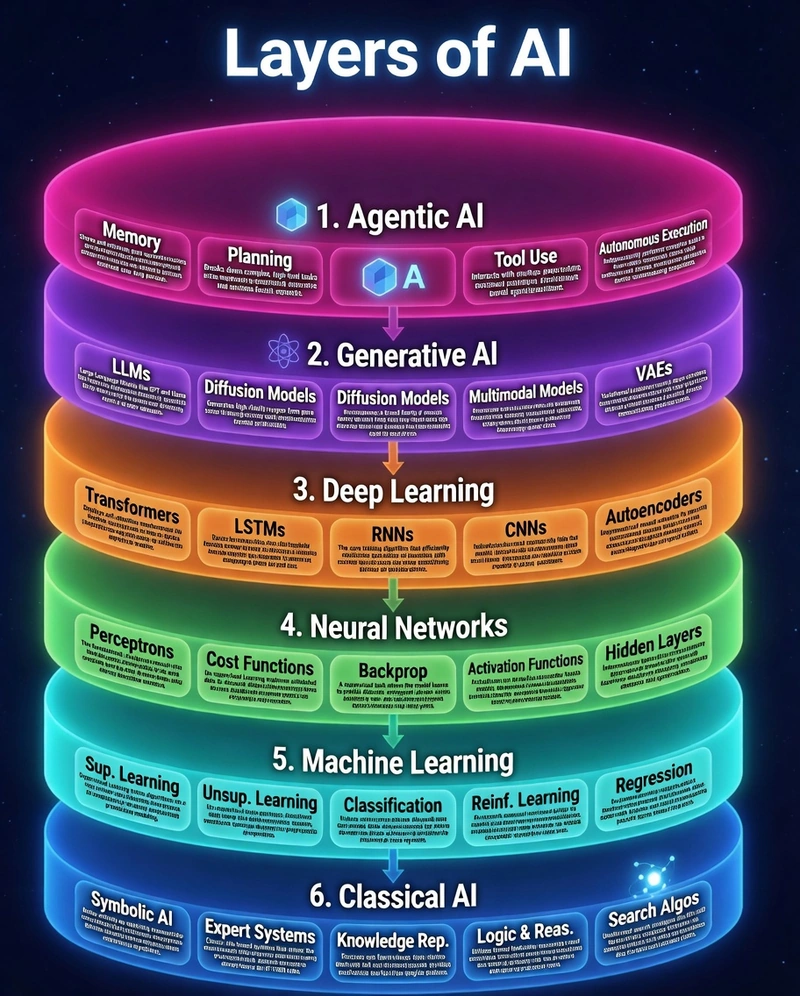
DTERMANISTIC AI MODEL WITH RAG
Deterministic Ai model

Deterministic AI Models with Retrieval-Augmented Generation (RAG): A Framework for Reliable and Reproducible Artificial Intelligence
Abstract
As artificial intelligence (AI) systems become increasingly integrated into enterprise, healthcare, legal, and scientific applications, the demand for reliable, explainable, and reproducible outputs has grown significantly. While large language models (LLMs) demonstrate remarkable reasoning and language capabilities, they often produce non-deterministic responses due to probabilistic token generation and changing contextual information. This variability presents challenges in environments where consistency, traceability, and regulatory compliance are essential. This article examines deterministic AI models enhanced with Retrieval-Augmented Generation (RAG), proposing an architecture that combines deterministic inference with external knowledge retrieval to improve accuracy, reproducibility, and factual grounding.
Keywords: Deterministic AI, Retrieval-Augmented Generation, RAG, Large Language Models, Explainable AI, Enterprise AI, Knowledge Retrieval, AI Governance.
1. Introduction
Generative AI has transformed natural language processing by enabling machines to generate coherent and contextually relevant text. However, conventional LLMs rely on probabilistic decoding methods that can produce different outputs for identical prompts, particularly when stochastic sampling techniques are used. Such behavior is acceptable in creative writing but problematic in domains including medicine, finance, law, engineering, and scientific research.
Deterministic AI seeks to eliminate unnecessary variability by ensuring that identical inputs, models, and retrieval contexts consistently generate identical outputs. When integrated with Retrieval-Augmented Generation (RAG), deterministic AI systems can combine stable reasoning with verified external knowledge, reducing hallucinations while increasing transparency.
2. Deterministic AI
A deterministic AI model produces identical outputs when provided with the same:
- Input prompt
- Model version
- Parameters
- Retrieval context
- Inference configuration
Deterministic inference typically involves:
- Greedy decoding or constrained decoding
- Temperature = 0
- Fixed random seed where applicable
- Stable prompt templates
- Version-controlled models
- Immutable knowledge bases
Unlike stochastic systems, deterministic AI emphasizes reproducibility over linguistic diversity.
3. Retrieval-Augmented Generation (RAG)
Retrieval-Augmented Generation extends language models by incorporating external knowledge during inference rather than relying solely on internal model parameters.
A standard RAG pipeline consists of:
- User query
- Query embedding
- Vector database search
- Document retrieval
- Context injection
- Language model generation
- Citation of supporting documents
This architecture enables models to answer questions using current organizational knowledge while reducing factual errors.
4. Integrating Determinism with RAG
A deterministic RAG system requires stability across every component of the retrieval and generation pipeline.
4.1 Stable Retrieval
Consistency depends on:
- Fixed embedding models
- Version-controlled vector databases
- Deterministic similarity search
- Consistent ranking algorithms
- Frozen document collections during inference
Even minor modifications to indexed documents may alter retrieved contexts and therefore affect generated responses.
4.2 Deterministic Generation
The language model should operate under deterministic decoding settings:
- Temperature = 0
- Top-p = 1
- Greedy decoding
- Fixed prompt templates
- Controlled system instructions
This configuration minimizes output variability.
5. Proposed Architecture
A deterministic RAG architecture consists of the following components:
- User Interface
- Query Preprocessor
- Embedding Model
- Vector Database
- Document Ranking Engine
- Prompt Constructor
- Deterministic Language Model
- Response Validator
- Citation Generator
- Audit Logger
Each component should be version controlled to guarantee reproducibility.
6. Mathematical Perspective
Let
Q = user query
R(Q) = retrieved documents
P = deterministic prompt template
M = fixed language model
The generated answer can be expressed as:
A = M(P(Q, R(Q)))
If M, P, and R remain unchanged, then:
A₁ = A₂ = … = Aₙ
for every repeated execution.
This deterministic property enables reproducible AI systems suitable for regulated environments.
7. Advantages
Deterministic RAG provides several benefits:
Reproducibility
Scientific and industrial applications require repeatable outputs for validation.
Explainability
Responses are grounded in retrieved evidence rather than solely in learned model parameters.
Reduced Hallucinations
External knowledge retrieval constrains model generation to relevant factual information.
Compliance
Deterministic behavior facilitates auditing under regulatory frameworks.
Debugging
Consistent outputs simplify system testing and root-cause analysis.
8. Challenges
Despite its advantages, deterministic RAG presents several challenges:
Knowledge Drift
Updating document repositories changes retrieval results.
Embedding Evolution
Changing embedding models alters vector representations.
Context Length Limitations
Large document collections require effective ranking strategies.
Infrastructure Complexity
Maintaining deterministic pipelines requires strict version management and monitoring.
9. Applications
Deterministic RAG systems are particularly valuable in:
- Clinical decision support
- Legal research
- Financial compliance
- Engineering documentation
- Scientific literature review
- Government services
- Enterprise knowledge management
- Cybersecurity operations
These domains prioritize reliability over response variability.
10. Future Directions
Emerging research explores hybrid architectures that integrate deterministic workflows with autonomous AI agents. Such systems may combine reproducible reasoning, dynamic retrieval, structured planning, and tool use while preserving traceability and auditability. Advances in knowledge graph integration, symbolic reasoning, and verifiable AI are expected to further enhance the reliability of deterministic RAG systems.
11. Conclusion
Deterministic AI models augmented with Retrieval-Augmented Generation represent a promising direction for trustworthy artificial intelligence. By combining reproducible inference with evidence-based retrieval, these systems address many limitations associated with purely generative models, including hallucinations, inconsistency, and limited transparency. As AI deployment expands into regulated and mission-critical sectors, deterministic RAG architectures are likely to become foundational components of enterprise AI ecosystems.
References
- Retrieval-Augmented Generation for Knowledge-Intensive NLP Tasks.
- Attention Is All You Need.
- Constitutional AI: Harmlessness from AI Feedback.
- Language Models are Few-Shot Learners.
- The AI Index Report
You may also like

Fable 5 By anthropic is it too dangerous
16 Jun, 2026
Agentic AI best use cases
16 Jun, 2026